
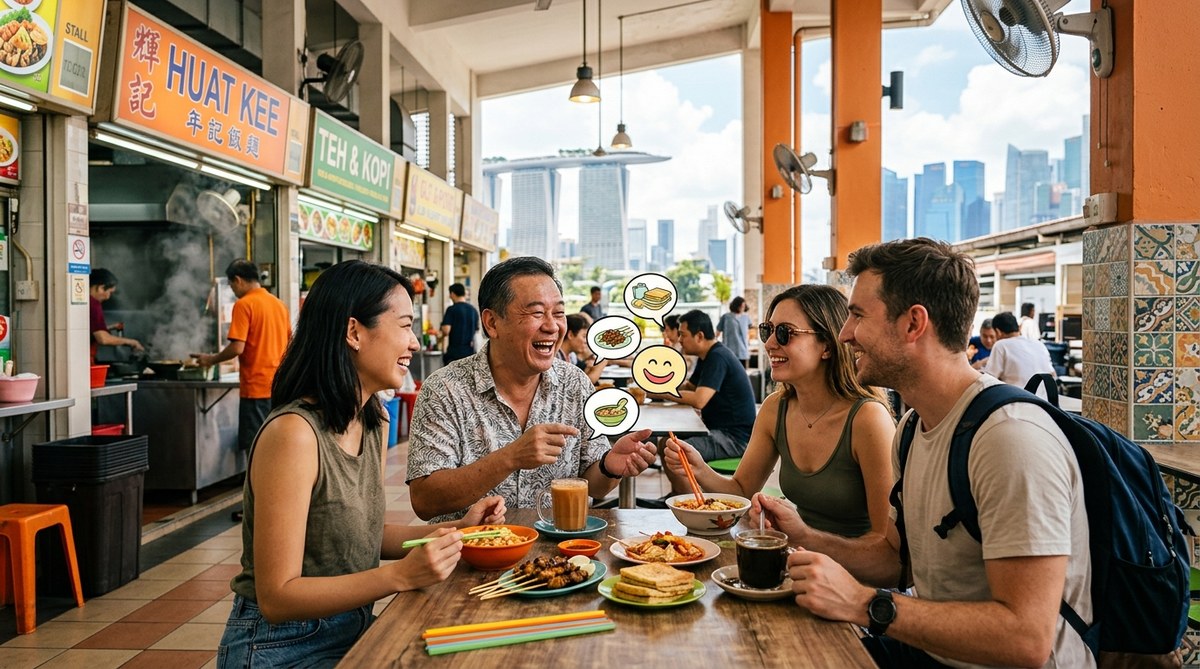
Singapore is a city where street corners become classrooms and conversations hum with a rhythm you can feel in the air. If you wander through neighborhoods like Tiong Bahru, Geylang, or Chinatown, you will hear a mosaic of languages, laughter, and the unmistakable zing of Singlish. Singlish is not just a way of speaking; it is a social tool that signals identity, camaraderie, and local spice. At Poskod.sg, we love digging into the phenomena that make Singapore feel alive, and Singlish is a perfect example. This guide is designed for visitors who want to join the conversation with warmth and respect, not just copy phrases from a phrasebook. Read on to understand what Singlish is, how it looks in everyday life, and how you can navigate it like a local while staying considerate of the people you meet.
What is Singlish and why it matters
Singlish is a unique blend of English with particles and vocabulary drawn from Malay, Hokkien, Teochew, Cantonese, Tamil, and other Singaporean languages. It emerged from everyday street talk and the multicultural fabric of Singapore’s society. Singlish is not a formal language; it is a living, evolving mode of communication that helps people bond quickly, signal shared experiences, and inject humor into ordinary chats.
For visitors, Singlish represents more than a few quirky phrases. It is a gateway to understanding how locals think about time, space, food, and queuing. It can also reveal subtle social cues about friendliness, politeness, or respect in different contexts. Learning to recognize Singlish as a social instrument rather than a rigid slang catalog will make encounters smoother and more enjoyable.
Key points to remember:
– Singlish thrives on particle words that sit at the end of sentences.
– It borrows tone, rhythm, and some vocabulary from multiple languages spoken in Singapore.
– It is deeply linked to local culture, including hawker centers, markets, and public transport.
– The best way to appreciate Singlish is to listen first, then try small, respectful phrases.
Core particles that shape Singlish
Particles are the heart and the humor of Singlish. They can alter tone, soften requests, or signal reassurance. Here are the most common particles you will hear, what they mean, and how to use them.
lah
- Meaning: soften a statement, show friendliness or insistence without shouting
- When to use: with friends or strangers in casual settings
- Example: This kopi is strong lah. Can share the sugar a bit more?
- Note: Often used to keep conversations relaxed and non confrontational
leh
- Meaning: emphasis or reassurance, sometimes a gentle pressure
- When to use: when encouraging someone or expressing agreement
- Example: You take your time lah, no rush leh
- Note: Can soften a request or show solidarity
lor
- Meaning: a sigh of resignation or emphasis in agreement
- When to use: to underline a point or express a casual sense of inevitability
- Example: Never mind lor, we try again later
- Note: A laid back flavor that fits everyday banter
meh
- Meaning: mild doubt or question, often rhetorical
- When to use: when you are not sure or want to prompt a response
- Example: You want to go now meh or later?
- Note: Keeps tone light and curious
na or na lor
- Meaning: used for soft insistence or confirmation
- When to use: as a gentle push in conversation
- Example: We meet at the hawker center, okay na lor
- Note: Combines with other particles to tailor tone
sia
- Meaning: emphasis on something impressive or surprising
- When to use: when you want to express strong feelings about a situation
- Example: The new cafe is so popular sia
- Note: Positive or negative emphasis depending on context
can
- Meaning: can be used to translate the English can but with a local lift
- When to use: to confirm capability or permission in casual talk
- Example: You go first can or not
- Note: Not a strict translation; it blends with the sentence flow
gotong
- Meaning: borrowed in playful way to describe teamwork or shared effort, often used jokingly
- When to use: among friends in light hearted chatter
- Example: We move the sofa together, gotong lah
meh and ah
- Meaning: combined usage to convey politeness or mild surprise
- When to use: in casual conversations with friends or colleagues
- Example: You finish already or ah, I am waiting meh?
These particles are not random punctuation; they are social glue. They tell locals about your relationship to the conversation and how much warmth they should perceive from you.
Common phrases and everyday contexts
In Singapore, much of Singlish lives in short, punchy phrases. Here are some common phrases you might hear when you are out and about.
Pengsan and shiok
- Shiok
- Meaning: delicious, satisfying, or great
- Example: This laksa is shiok
- Pengsan
- Meaning: exhausted or stunned
- Example: After that long queue, I pengsan
Kiasu and kiasi
- Kiasu
- Meaning: fear of losing out, overly competitive
- Example: He buy two sets of tickets because he worried about kiasu
- Kiasi
- Meaning: overly careful or anxious
- Example: Don’t worry, no need to be kiasi
Chope
- Meaning: to reserve something, often a seat or space, by placing an item down
- Example: I will chope a seat with my bag
- Note: The practice comes from a culture where space is at a premium and queueing can be competitive
Paiseh
- Meaning: embarrassed, shy, or apologetic
- Example: Paiseh, I am a little late
Sian
- Meaning: boredom or tiredness with something repetitive
- Example: Monday again, so sian
Alamak
- Meaning: a mild exclamation of surprise or frustration
- Example: Alamak, I dropped my phone
Catch no ball
- Meaning: I do not understand
- Example: Can you explain again, catch no ball
Ler, leh, meh in phrases
- Examples:
- Eh, you know this place or not ah
- Can lah, no problem lah
- Quick, finish by five, can or not
Food related terms
- Kopi, teh, kopi tiam, teh peng
- Mee, kueh, nasi, chili crab, laksa
- How Singlish flavors context: “lah” after a food remark makes compliments warmer or jokes gentler
The beauty of these phrases lies in how they shape the social climate. They are less about the exact words and more about how you use them to join the conversation with warmth and humility.
Pronunciation tips and rhythm
Singlish has its own music. It is not about perfect grammar in the traditional sense but about natural rhythm, emphasis, and clarity. Here are a few tips to sound more natural when you speak Singlish as a visitor.
- Listen first, imitate second: Spend time listening to locals and note how the sentence ends with a soft particle rather than a hard stop.
- Keep sentences brisk: Singlish tends to favor short, direct lines with a playful ending particle.
- Emphasize the last word of a statement when you want to convey certainty or finalize a point
- Their tone often rises slightly at the end of questions, a cue that invites response rather than demands compliance.
- Do not overuse Singlish in formal settings: If you are in a business meeting or formal setting, a light touch of Singlish or a respectful version of Standard English is usually best.
Variations among communities and languages
Singapore is a multilingual city. The Singlish you hear on a hawker center bench might differ slightly from what you would hear in a residential estate or at a bus stop. Some notes:
- Hokkien and Teochew words appear in everyday speech through phrases like “aiyo” and “lor”.
- Malay plays a role in many common terms and concept words like “mamak” or “kampong” that have found their way into casual speech even among non Malay speakers.
- Mandarin influences arrive through loanwords and pronunciation patterns that shape intonation and rhythm.
As a visitor, you do not need to master every variation, but recognizing there are differences helps you avoid stereotype or misinterpretation. Respect for the local mix will earn goodwill and more open conversations with locals.
How Singlish evolved in the digital age
Singlish did not stay on the street corners. It moved into cafes, chat apps, memes, and social media, adapting with speed. The digital age has amplified playful wordplay and meme culture around Singlish. Some trends you might notice:
- Short, punchy phrases that fit into 280 characters or less
- Emoji and sticker use that mirror the tone of particles in text and voice
- Spelling variations that reflect pronunciation, such as “lah” or “leh” showing up as hashtags or hashtags icons in posts
- Memes that celebrate local experiences like queueing, hawker stalls, or the chaotic efficiency of public transport
If you are curious, search for local memes that reference popular phrases like “lah hor meh” or “kan cheong.” The humor is often gentle and inclusive, designed to lift a conversation rather than poke fun at someone.
Etiquette: using Singlish with respect
Singlish is a cultural symbol and not everything is up for grabs. Here are practical guidelines to navigate respectfully:
- Observe first: Listen to how locals use particles and phrases in different social settings before trying to imitate.
- Mirror respectfully: If you are in a casual setting with friends, you can reflect the tone you are hearing. If the conversation is more formal, lean toward Standard English with light Singlish peppering if appropriate.
- Read the room: If someone looks tense or is in a crowded place, avoid witty or sarcastic remarks that could be misinterpreted.
- Use local vocabulary in food and travel contexts: Singlish often shines most in everyday experiences like bargaining in markets or sharing hawker center finds.
- When in doubt, ask politely: A quick, friendly question like, “Is it okay if I use a few Singlish phrases?” can go a long way.
Practical tips for visitors
If you are planning a trip to Singapore and want to feel the pulse of Singlish without overdoing it, here is a simple starting plan.
1) Learn a few phrases
– Kopi or teh, please
– Where to sit?
– Shiok or not
– Paiseh
2) Listen and observe
– Pay attention to tone and manners in different spaces
– See how locals use particles to adjust tone
3) Start small
– Use one or two phrases in a friendly, respectful manner
– Let locals guide your usage through their responses
4) Be mindful in formal situations
– In business meetings or formal settings, use Standard English more often and insert gentle Singlish touches only if appropriate.
5) Learn why behind the words
– Singlish isn’t just a list of phrases; it reflects social bonds, practicality, and humor in everyday life.
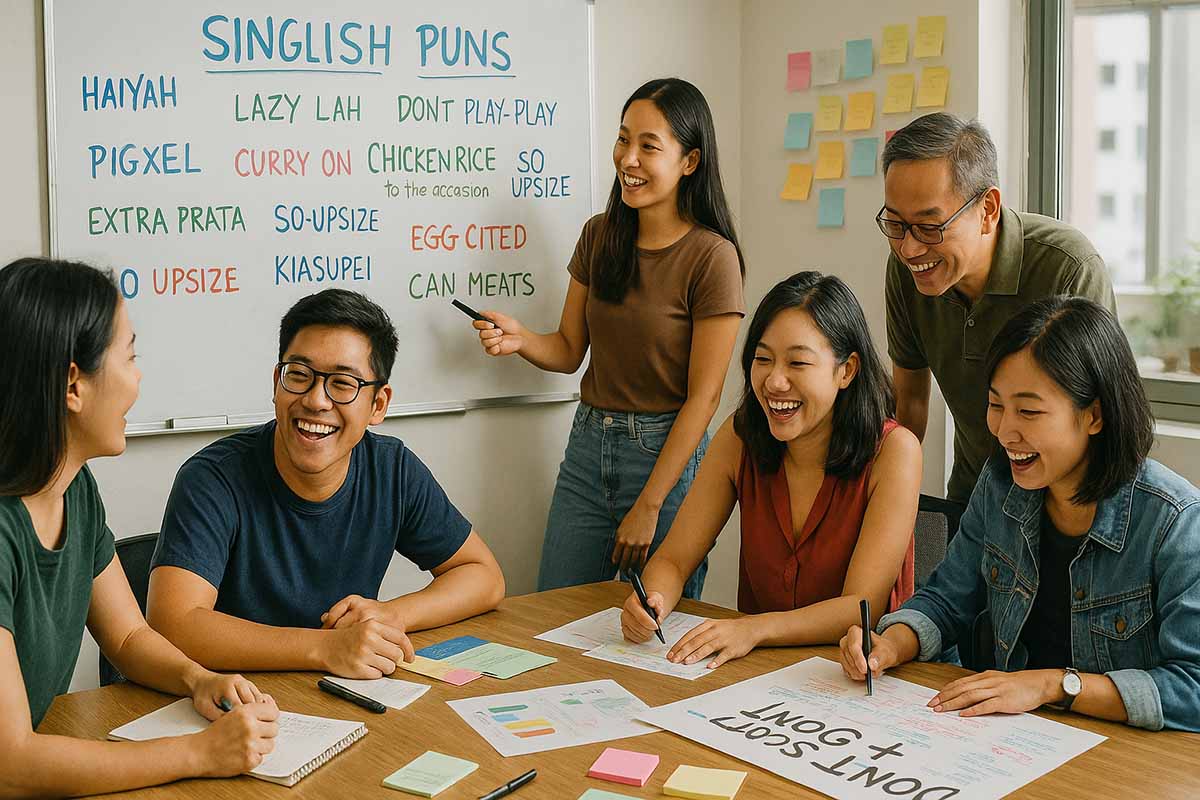
Local word play and memes: fun examples
Singaporean word play often blends languages and humor. Here are some playful ideas to appreciate the local vibe without pretending to be a master of Singlish:
- Word blends: Create casual phrases by combining particles and common words, like “lah lah lah” to emphasize positivity or “leh can meh” in a light refusal.
- Hawker humor: Phrases about queueing times or stall rotations show the social choreography of everyday life.
- Street sign repurposing: Locals will reuse familiar phrases in memes to describe daily frustrations or upgrades to a day.
A gentle rule of thumb is to let humor come from a place of respect for shared experiences, not from mockery of someone else’s culture.
Resources to learn more and explore
- Poskod.sg Phenomena section: You will find stories that capture Singapore’s peculiar and delightful moments, including language and culture.
- Local dictionaries or glossaries: Look for trusted resources curated by Singaporeans who understand the dialect and its etiquette.
- Community events and hawker centers: Real life practice spaces where Singlish thrives.
- Media and podcasts featuring Singaporean voices: Listening to local talk shows, radio segments, or street interviews can broaden your sense of rhythm and nuance.
A quick guide you can use today
- Start with empathy: Appreciate Singlish as a social tool rather than a problem to fix.
- Pick two to three particles or short phrases to practice in casual settings.
- Observe, then join in with a light touch rather than a heavy repertoire.
- When talking to older or more formal audiences, lean toward Standard English with a friendly, respectful tone.
Six common situations and how to approach them
1) Meeting friends at a hawker center
– Use a friendly greeting, follow with a light Singlish phrase if the vibe is right, and keep energy high.
– Example: Hey, you all want kopi or teh first, then we grab seats lah.
2) Asking for directions from a local
– Start with Standard English, then add a gentle Singlish sentence if the conversation flows.
– Example: Excuse me, could you help me with directions? Maybe after that we can find a good kopi spot lah.
3) In a shop or market
– Friendly tone and humor can go a long way.
– Example: Where is the best stall for chili crab? Shiok foods here meh?
4) On public transport
– Short, polite phrases work best. Save more Singlish for casual gatherings.
– Example: Excuse me, please alight first, can or not?
5) At a cafe or restaurant
– A small amount of Singlish can echo local vibe. Compliments or light jokes welcome.
– Example: This laksa is shiok ah, thanks for recommending it.
6) Meeting someone older or more formal
– Be mindful, use Standard English as the base, with subtle local flavor if appropriate.
– Example: Good afternoon, would you mind sharing the time, please? Yes, lah can also be used in some contexts when you are sure of the tone.
Why Singlish is a phenomenon worth understanding
Singlish is not a relic; it is a living, dynamic phenomenon that speaks to how Singaporeans bridge differences and embrace shared experiences. It is a product of history, migration, urban life, and the daily hustle. It captures the humor, resilience, and warmth that greet you when you stroll through a neighborhood, queue for a meal, or mingle with friends at a coffee shop. Understanding Singlish gives you more than a set of phrases. It offers a lens into the way locals think about time, community, and identity.
Poskod.sg celebrates the city’s soul by exploring stories about people, places, and phenomena. Singlish is a perfect example of that fabric — a small but vibrant thread that helps connect strangers into a local chorus. By embracing Singlish with curiosity and respect, visitors can participate more fully in Singaporean life and leave with a richer, more positive memory of their trip.
Final thoughts for visitors
Singlish is a doorway to understanding Singapore beyond the guidebook. It reveals the pace of life, the love of food, and the humor that keeps conversations lively. Use it as a bridge to connect with locals, not as a performance or a template you memorize. The best moments come when you listen first, show appreciation for the culture behind the words, and respond with warmth and curiosity.
If you want to continue exploring Singlish and other phenomena that shape Singapore today, keep an eye on Poskod.sg. Our writers hunt down the quirks, patterns, and people that make Singapore feel like home to so many. Whether you are a traveler, a student, or a local who loves fresh perspectives, you will find stories that celebrate the city’s colors and voices.
Thank you for spending time with this Singlish explainer. We hope it helps you feel more confident soaking in the city’s energy, one conversation at a time. If you have your own favorite Singlish moments or phrases you would like to share, tell us in the comments or reach out through Poskod.sg. We love hearing from readers about how language shapes their Singapore stories.








Leave a Reply